家族诞生
活力中国调研行丨“批量造星”照进现实:价格打下来,速度提上去_我的网站

A |
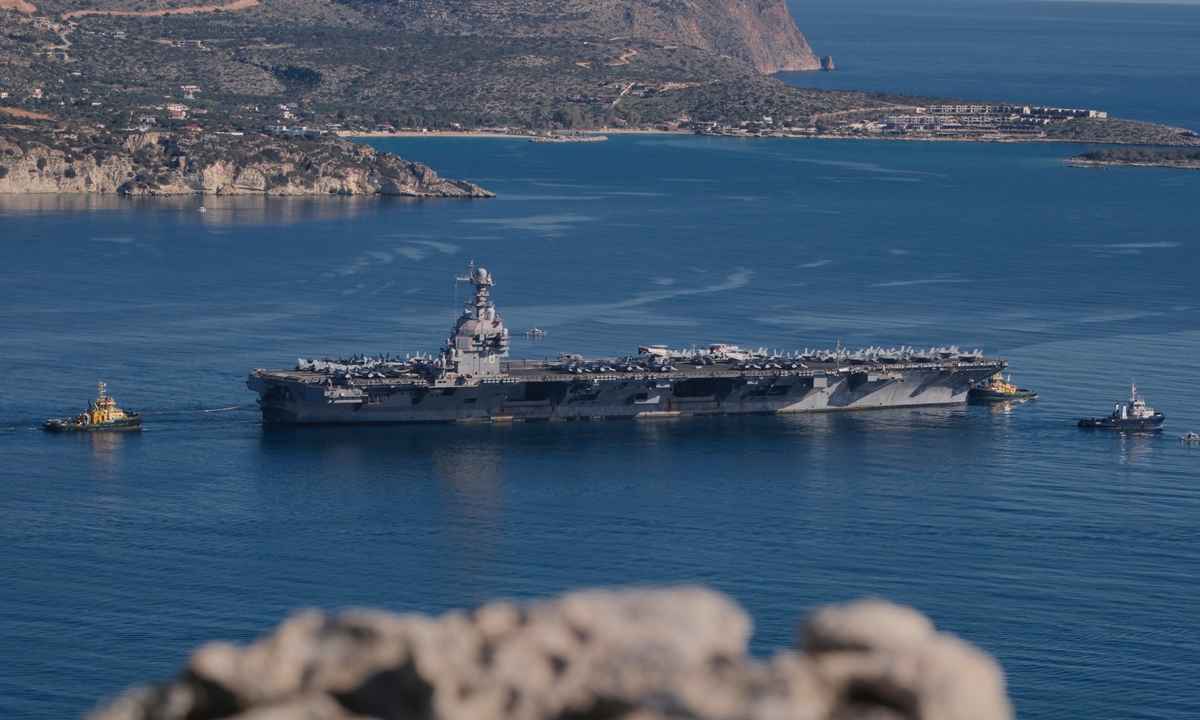
The Washington Post reported on Saturday that the US Navy is considering a major redesign of its new Ford-class aircraft carriers to better match Trump's preferred aesthetic, with the president favoring ships that more closely resemble US carriers from the World War II era. One option under study would move the carrier's island farther forward, toward the middle of the ship.
US officials cited by the report warned that such a change could require billions of dollars in redesign costs and cause substantial delays.
The potential island redesign comes only days after Trump ordered another far-reaching change to the Ford-class program. On Thursday, he signed a national security memorandum directing the Pentagon and Navy to develop a plan within 60 days to replace the Electromagnetic Aircraft Launch System (EMALS) with steam catapults and the Ford-class carriers' Advanced Weapons Elevators with hydraulic systems, beginning with the future USS Doris Miller, or CVN-81, USNI News reported.
Trump has repeatedly criticized EMALS as "too complex" and "not as effective as steam catapults," according to Reuters.
But the order would reverse a technology path the US Navy has pursued for more than a decade. When the Navy selected EMALS in 2009, it said the system would lower overall lifecycle costs, require less maintenance than steam catapults and place less physical stress on carrier-based aircraft, per Reuters.
As of March 2026, the USS Gerald R. Ford had conducted 36,863 EMALS launches, according to Pentagon documents cited by Reuters.
General Atomics, the manufacturer of EMALS, has warned against changing course on the Doris Miller, saying nearly 50 percent of production related to the system has already been completed and that a switch now would create significant cost, schedule and integration risks, according to Reuters.
Zhang Junshe, a Chinese military affairs expert, told the Global Times on Sunday that the Ford-class carrier's aft-positioned island is not merely an aesthetic choice, but is closely tied to flight-deck efficiency and landing safety. "Moving the island farther aft creates more space around the catapults for aircraft parking and handling, helping shorten launch preparation time, while also reducing airflow disturbance during aircraft recovery," he said.
Relocating the island forward would not be a simple cosmetic adjustment, but a major redesign affecting weight distribution, buoyancy, flight-deck layout and aerodynamics, with significant implications for both cost and schedule, Zhang noted.
Song Zhongping, another Chinese military affairs expert, told the Global Times that Trump's demand is one thing, but turning it into an actual warship design is another.
"The first four Ford-class carriers have either entered service or are already in different stages of construction, leaving very little room for fundamental changes to their overall designs," Song said. Even the fifth and sixth ships - the future USS William J. Clinton, CVN-82, and USS George W. Bush, CVN-83 - would face considerable cost and engineering consequences if the Navy attempts to overturn their established technological architecture, he said.
The US Navy officially announced the names of CVN-82 and CVN-83 in January 2025, per the US Navy official website.
"There is an obvious gap between US President's political will and the engineering realities of aircraft-carrier construction," Song said.
Such proposed changes come as Ford-class construction timelines have already grown considerably compared with those of the preceding Nimitz class. The US Congressional Budget Office (CBO) said in April that Nimitz-class carriers typically took seven to eight years to build, while Ford-class ships are currently taking roughly 10 to 11 years. In a separate assessment released this month, the CBO estimated that future Ford-class carriers under the Navy's 2027 shipbuilding plan could cost about $22 billion apiece.
"Electromagnetic launch represents an advanced direction in aircraft-carrier catapult technology and has far greater development potential than traditional steam catapults," Song said. "If the US gives up electromagnetic catapults and returns to steam catapults, that would be a technological regression and a step backward."
Echoing Song, Zhang said electromagnetic catapults offer more precise control of launch energy and broader compatibility with different types of carrier-based aircraft, while requiring less shipboard space than steam systems with their extensive high-pressure piping.
"Replacing EMALS with steam catapults on a Ford-class carrier already designed around electromagnetic launch would not only represent a technological step backward, but could also turn an attempt to reduce risk into a new source of engineering and system-integration risk," Zhang said.
。 播放 下一个 打开循环播放 00:00 / 00:00 倍速 3.0X 2.0X 1.5X 1.25X 1.0X 0.75X 0.5X 多音轨 AirPlay 0 静音播放中,点击 恢复音量 画中画 网页全屏 全屏 你可以 刷新 试试 视频信息 1.33.6 播放信息 上传日志 调试信息 [X] 视频ID VID - 播放流水 Flowid - 播放内核 Kernel - 显示器信息 Res - 帧数 - 缓冲健康度 - 网络活动 net - 视频分辨率 - 编码 Codec - mystery mystery - 按住画面移动小窗 在浩瀚星河中,人类对宇宙的探索从未停歇。曾被视为“高精尖”代名词的卫星制造,如今正在江苏无锡上演一场颠覆性变革。 7月22日10时54分,我国太原卫星发射中心在上海东部海域使用引力一号遥四运载火箭,将搭载的东坡13、14星、东坡17、18、19、20星、西光贰号01星、天仪49星、紫丁香三号卫星共9颗卫星顺利送入预定轨道,飞行试验任务取得圆满成功。此次升空的9星中,6颗“东坡”系列卫星就是由江苏无锡企业国宇星空研制,包括4颗SAR雷达卫星与2颗光学卫星,能捕捉毫米级的地表微小变化,服务智慧城市建设。 7月22日10时54分,我国太原卫星发射中心在上海东部海域使用引力一号遥四运载火箭发射卫星。上海海事局供图 7月20日,新京报贝壳财经记者跟随“活力中国调研行”走进微纳星空无锡商业卫星智能化园区,看到了卫星生产的精密图景。 在这条智能化产线中,脉动式节拍生产与岛式柔性工位协同运转,覆盖200公斤至500公斤级卫星的制造链条高效运转。 从传统“手搓”到智能化“流水线量产”,这座江南城市正以数字化、智能化的制造模式,重新定义商业卫星的生产逻辑。 微纳星空无锡商业卫星智能化园区生产车间。受访者供图 不唱“独角戏”,近50家本地企业加入“航天朋友圈” “未来卫星可能像生产汽车一样流水线作业。”微纳星空公共事务部总监刘晓光的话语正在变为现实。园区采用的“脉动式”节拍生产模式,通过精确的节奏控制实现工序无缝衔接;而“岛式”柔性工位则能灵活切换不同规格卫星的生产任务,支持共线并行或串行制造。这种刚柔并济的生产线设计,使单星生产周期从数月缩短至一两个月甚至二十余天,成本大幅降低,效率与可靠性却成倍提升。

B | 在测试环节,园区构建的全生命周期测试验证体系堪称“太空环境模拟工厂”。热真空测试能模拟零下180摄氏度至120摄氏度的极端温差,振动台可精准复现火箭发射时的剧烈振动,电磁兼容实验室则能排除卫星在复杂电磁环境中的潜在干扰故障……。

C | “每一颗卫星都要在这里经历一系列的‘严苛考验’,确保在太空中的万无一失。”刘晓光介绍道。 热真空测试能模拟零下180摄氏度至120摄氏度的极端温差。受访者供图 无锡的卫星量产革命,不是一家企业的“独角戏”,而是全产业链协同创新的成果。

D | 以无锡高新区为核心,这里已形成全市唯一完整覆盖“星、箭、网、端”全链条的商业航天产业集聚区。 深蓝航天在液体可回收复用运载火箭领域持续突破,其“星云一号”和“星云二号”系列火箭为卫星批量入轨提供运力支撑;中科数测等企业则在数据应用端深耕,构建“天地一体化”服务网络。

E | 从火箭制造到卫星批产,再到数据应用,一条完整的产业纵贯线已然贯通。 依托制造业底蕴,无锡本地配套能力加速提升。飞而康、新超合金等企业为火箭提供关键部件,氦星光联的激光通信终端、屹信航天的通信载荷等配套产品相继涌现。

F | 据统计,近50家本地企业已嵌入商业航天供应链,东方空间火箭发动机的零部件本土化率高达65%。这种“链主引领+配套协同”的生态,让无锡商业航天产业有了强大韧性。 微纳星空无锡商业卫星智能化园区商业卫星生产设备。受访者供图 无锡产线年产卫星能力超150颗,瞄准“有”到“强”跨越 技术攻关的突破,让“无锡造星”底气十足。 微纳星空累计取得157项发明专利,深蓝航天掌握针栓式发动机设计与火箭垂直回收技术,银河航天的柔性太阳翼技术全球领先……这些创新成果不仅打破国外技术垄断,更推动卫星制造向高性能、低成本方向迈进。 截至2026年6月,微纳星空已成功研制并发射36颗卫星,无锡产线年产卫星能力超150颗,真正迈入“批量造星”时代。 6月中旬,随着6颗环天星座组网卫星从无锡“星工场”出征,无锡商业航天正站在新的历史起点。 这座总投资10亿元、占地4.89万平方米的智能化园区,不仅承载着微纳星空的规模化梦想,更被寄予成为国家巨型星座制造支撑阵地的厚望。未来,这里将形成更庞大的卫星量产集群,持续为“中国星链”添砖加瓦。 无锡的商业航天蓝图不止于此。

G | 面向“应用服务主导、轨道频率资源稀缺化、在轨经济萌芽”的行业趋势,无锡正以“强链、补链、聚才、拓用”为主线,推动产业从“有”到“强”跨越。通过引育产业链上下游企业、构建差异化人才战略、拓展“卫星+”融合应用场景,无锡致力于打造全国商业航天创新应用示范基地。低空经济、车联网、生态环境监测等领域,“卫星+5G+AI”的融合解决方案正在加速落地,释放巨大经济价值与社会效益。 正如此次发射一样,发射海域的南移,意味着无锡制造的卫星,无需远赴北方,即可在家门口的近海升空。

H | 这不仅大幅缩短了运输周期、降低了物流成本,更重要的是,它将无锡的产业链与长三角的广阔市场紧紧捆绑在一起。 新京报贝壳财经记者 俞金旻 编辑 王进雨 校对 柳宝庆。
Current article:http://n0p.shangyaohujunwei.bond/b5k2rwg/20260826/232743.html
Published on:09:42:34